Home Theater Lighting Design
Ideas and fixture options for creating the perfect screening-room atmosphere.
Set the Mood
Thoughtful lighting transforms a home theater from a dark room into an immersive experience. Dimmable sconces, recessed ceiling fixtures, and subtle step lighting help define the space without distracting from the screen. Layering ambient, task, and accent sources gives you control over brightness and tone for any viewing scenario.
Popular approaches include cove lighting along ceiling perimeters, wall-wash fixtures that reduce eye strain, and low-level aisle markers for safe movement during films. Warm color temperatures around 2700K–3000K tend to feel inviting without competing with projected or panel light.
The key to a successful home theater lies in controlling light with precision. Dimmable fixtures allow you to transition seamlessly from bright social gatherings to a darkened screening environment. Layered lighting—ambient sources for general illumination, task lights for reading or equipment access, and accent fixtures to highlight architectural details—gives you complete command over the room's mood. Recessed ceiling lights with adjustable trims can be directed away from the screen, while cove lighting along the perimeter casts a soft, indirect glow that reduces eye fatigue. Thoughtful placement of these sources ensures the focus remains on the viewing experience.
Step and aisle lighting adds both safety and style to a home theater. Low-level LED strips or small puck lights along walkways guide guests without creating glare or distracting from the film. These subtle markers can be tied into the same dimming system as the main lights, so they automatically lower during playback. Wall sconces with shielded bulbs provide gentle perimeter illumination that helps define the room’s shape without competing with the screen. The result is a polished, professional atmosphere where every element serves a purpose, blending practicality with the relaxed comfort expected in a dedicated media space.
Accent lighting can transform a home theater from functional to spectacular. Backlighting the display itself with a bias light strip reduces perceived contrast and lessens eye strain during long viewing sessions. Track lighting or adjustable picture lights let you highlight posters, shelving, or decorative elements without washing out the screen. For a truly immersive effect, consider color-tunable LED strips behind seating risers or along baseboards, adding a subtle glow that echoes on-screen action. When paired with a smart control system, these accents can be programmed for presets—bright for cleanup, dim for previews, and dark for the main feature.
Fixture Styles to Consider
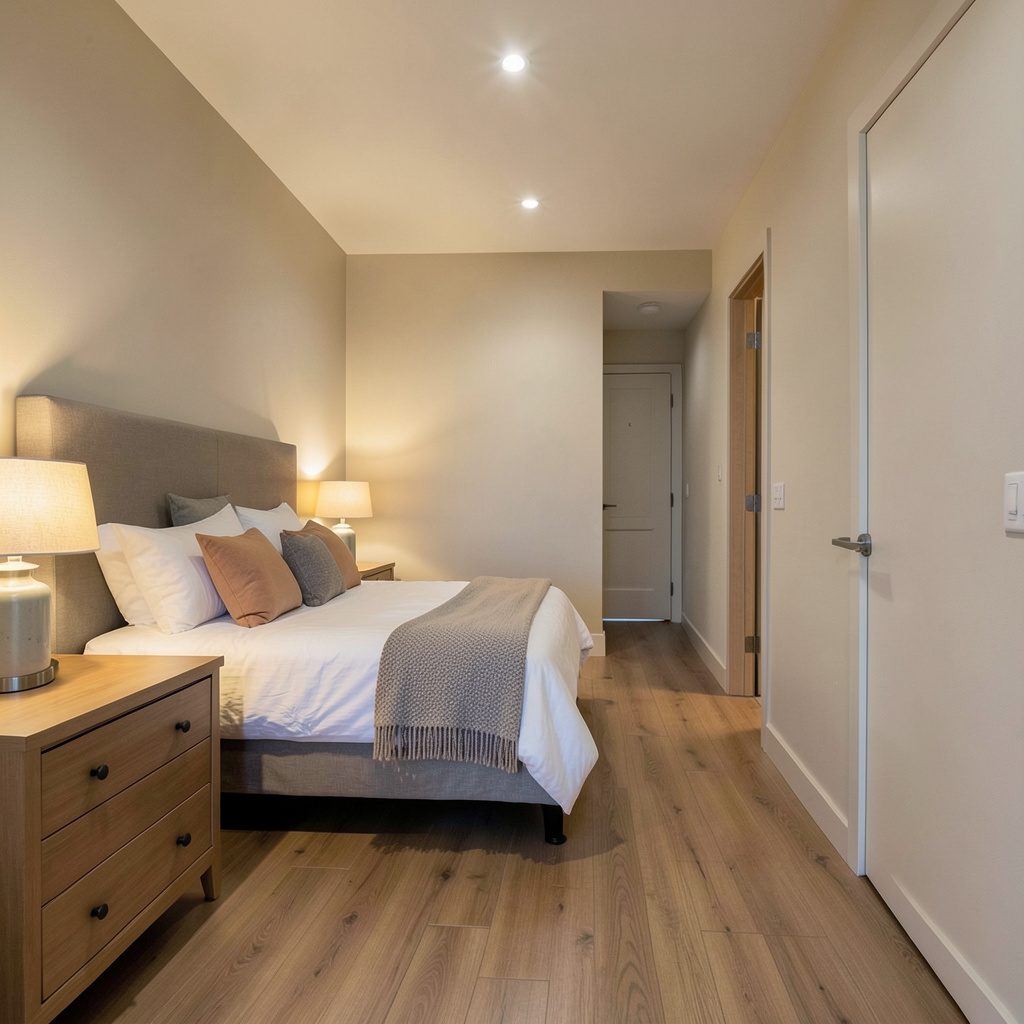
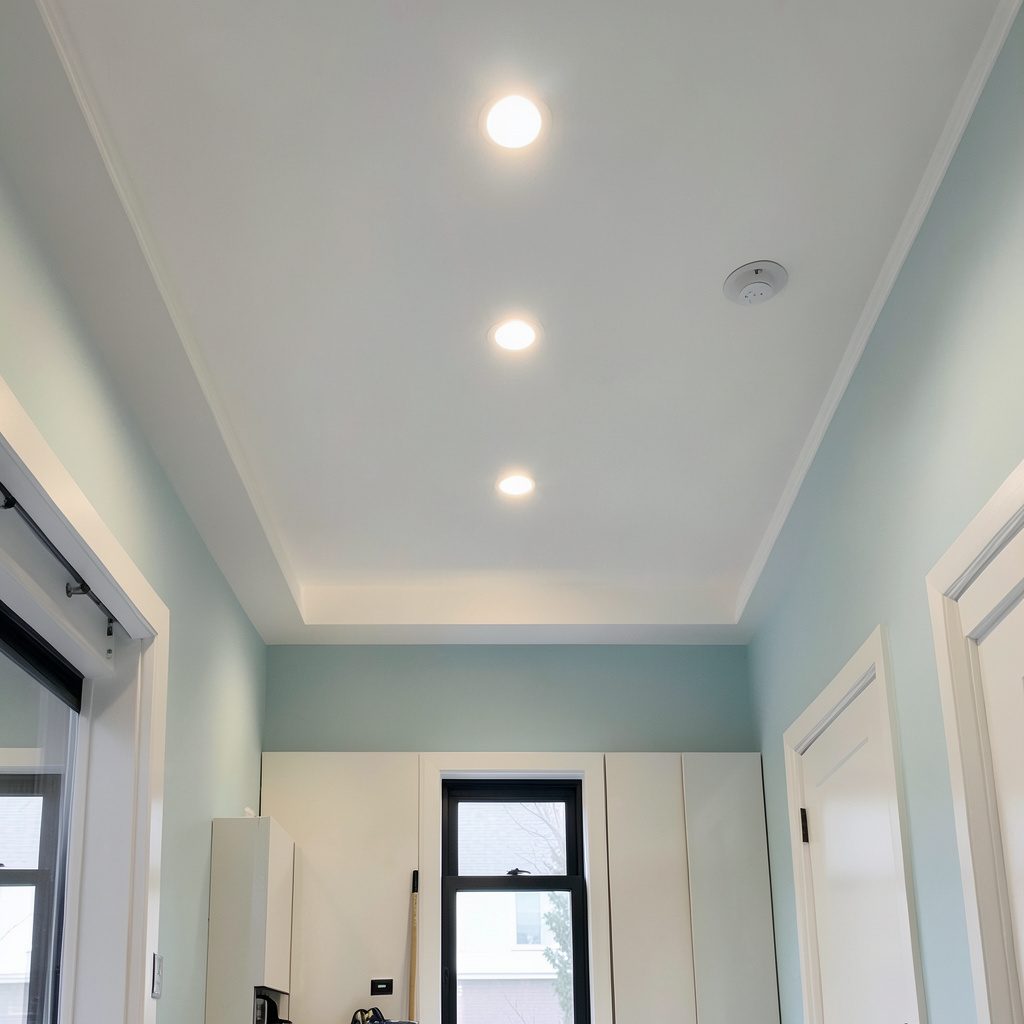
Recessed Ceiling Lights
Discreet and directional, recessed cans provide general illumination without visible hardware. Ideal for rooms with lower ceilings or a clean, minimal look.
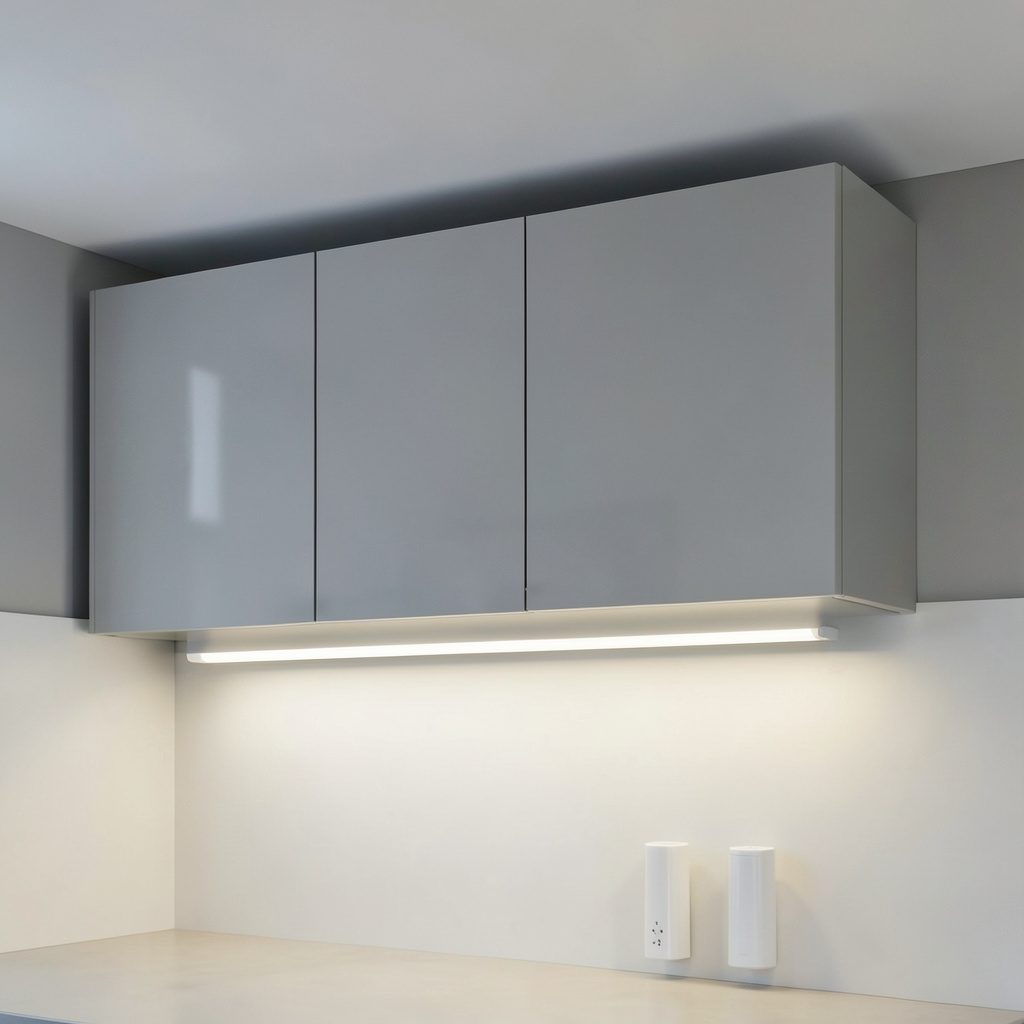
LED Strip & Cove Lighting
Flexible LED strips tucked into crown molding or behind acoustic panels deliver indirect light that reduces glare and adds a refined architectural feel.
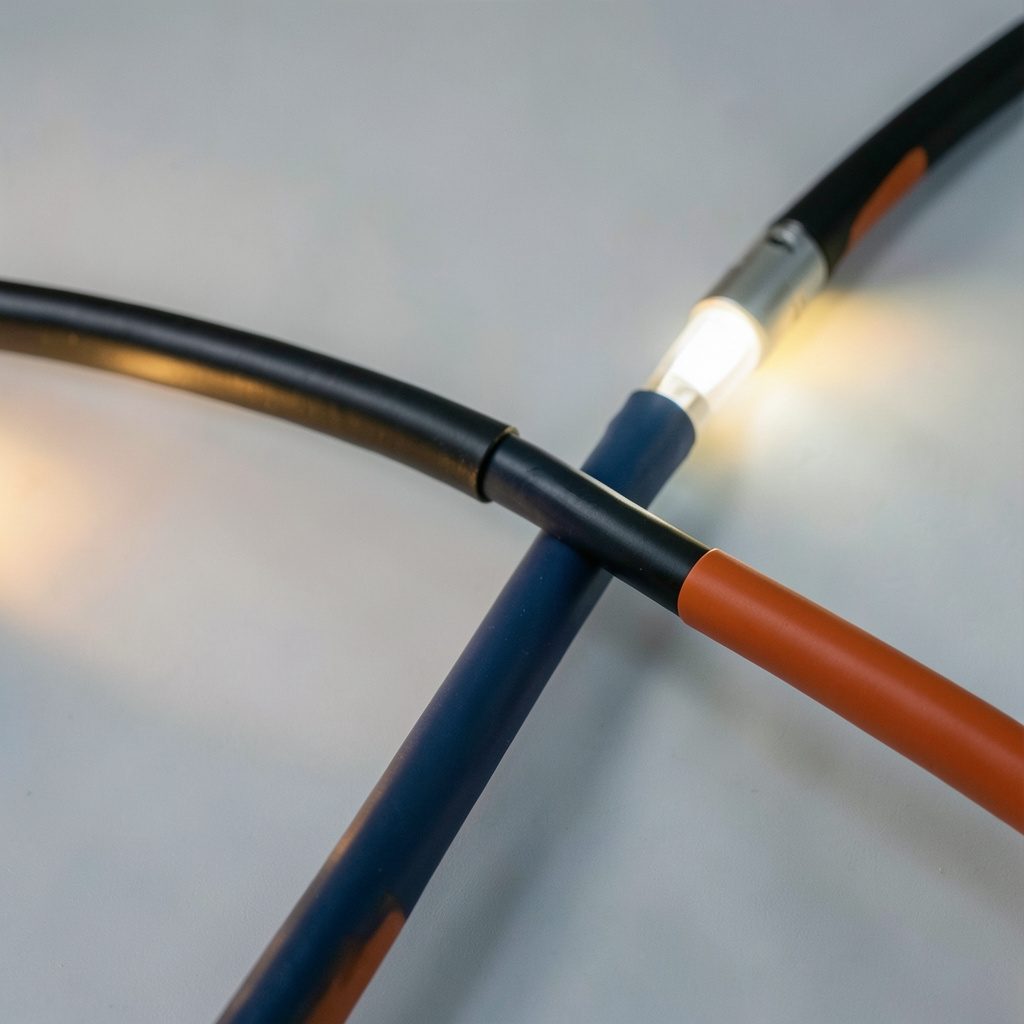
Track & Cable Systems
Adjustable track heads let you aim light precisely where needed — highlighting seating rows, equipment racks, or decorative wall treatments.
Design Tips
- Dimming is essential. Every fixture in a theater benefits from smooth, wide-range dimming — ideally with remote or smart-home control.
- Keep light off the screen. Position fixtures so no direct beam hits the viewing surface; use baffles or directional trims where needed.
- Layer your sources. Combine overhead ambient light with wall sconces, step lights, and accent spots for a flexible, cinema-like environment.
- Choose dark, matte finishes. Fixtures with black, bronze, or brushed-nickel housings minimize reflections that could catch the eye during a film.
Browse More Categories
Explore additional lighting options for every room in your home.